Important Cultural Property Buildings, Buildings from the Meiji Period
Ishikawa-mon Gate
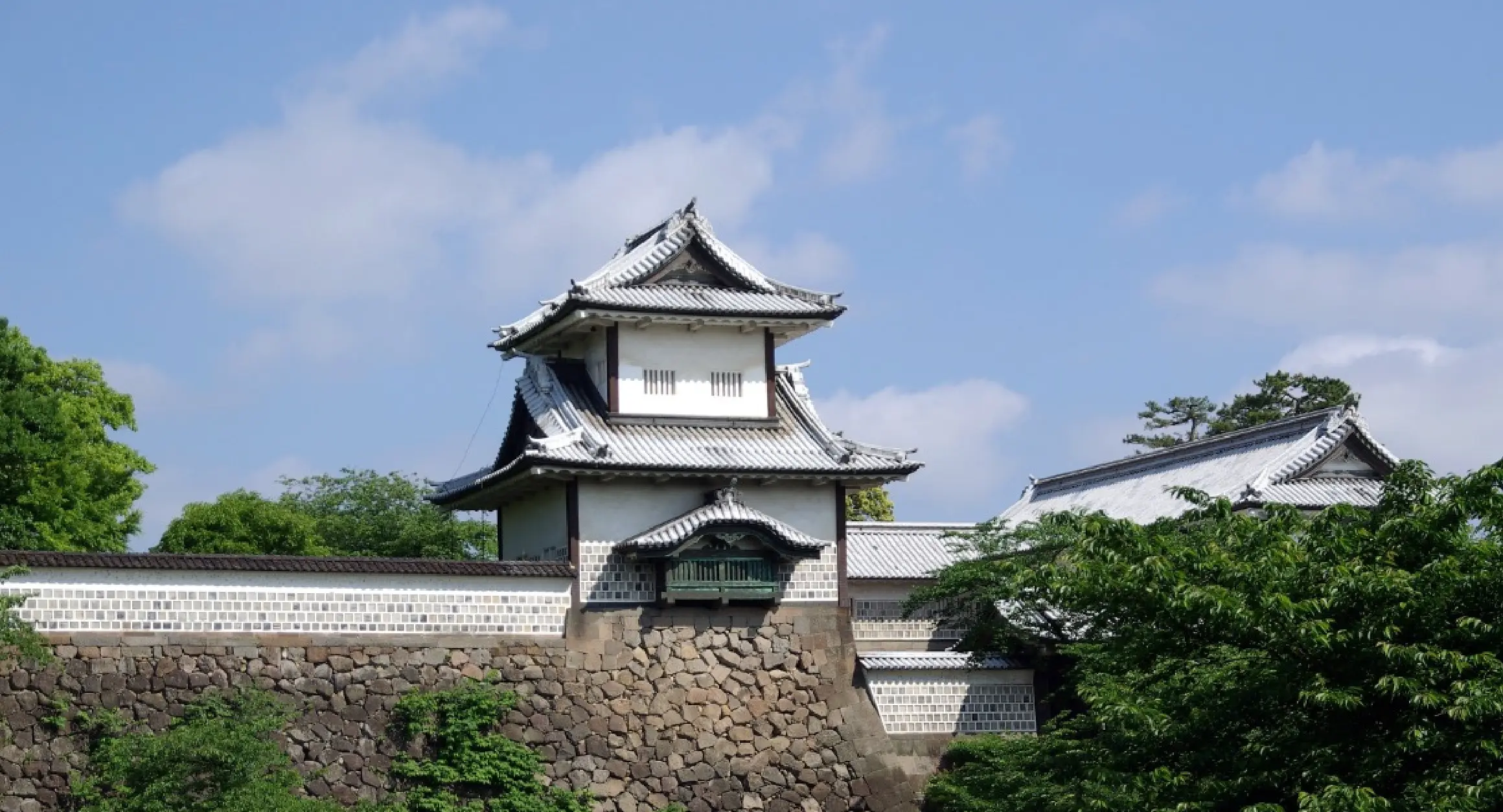
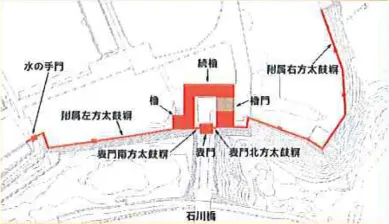
The Ishikawa-mon Gate served as the castle’s karamete‑mon (rear gate) and is a masugata‑style gate complex consisting of the front gate (the first gate), the turret gate (the second gate), flanking drum‑wall structures on the left and right, a two‑story, two‑level turret, and an attached single‑story turret.
A masugata gate is a defensive structure that forms a square courtyard enclosed by walls or long turret corridors. It takes its name from its resemblance to a masu, a traditional wooden measuring box.
This design allowed defenders to attack enemies who entered the courtyard from three sides, making it one of the strongest defensive configurations in Japanese castle architecture.
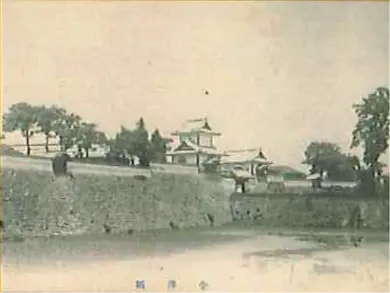
Meiji‑period appearance
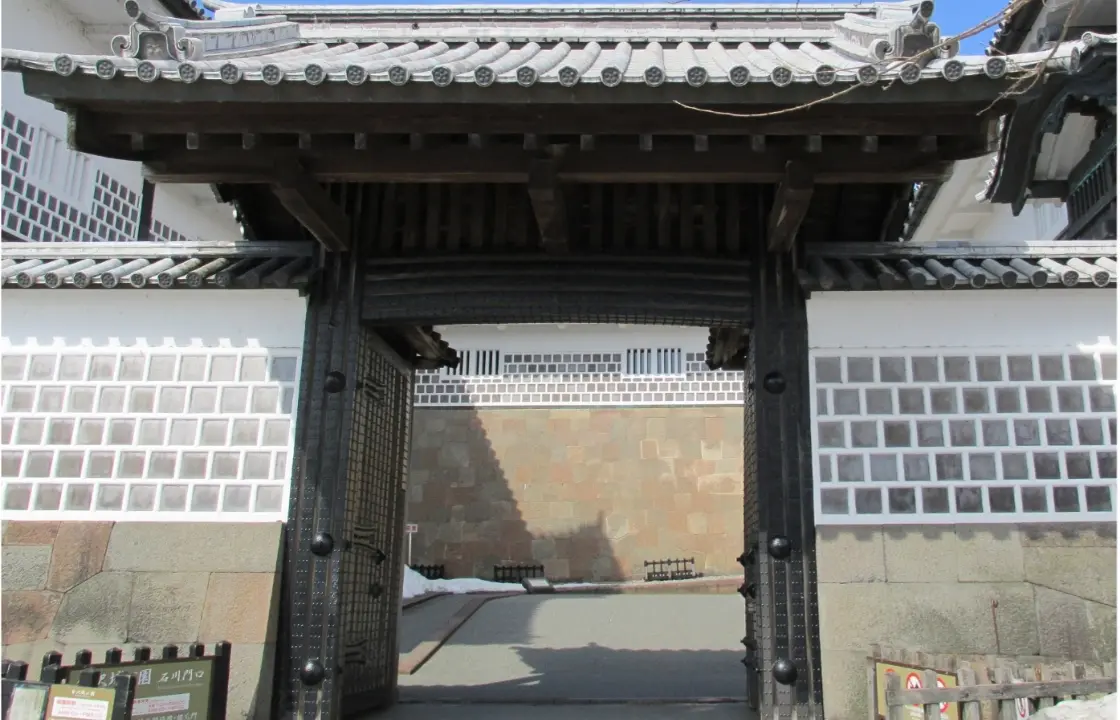
Ichinomon Gate in the Koraimon Style
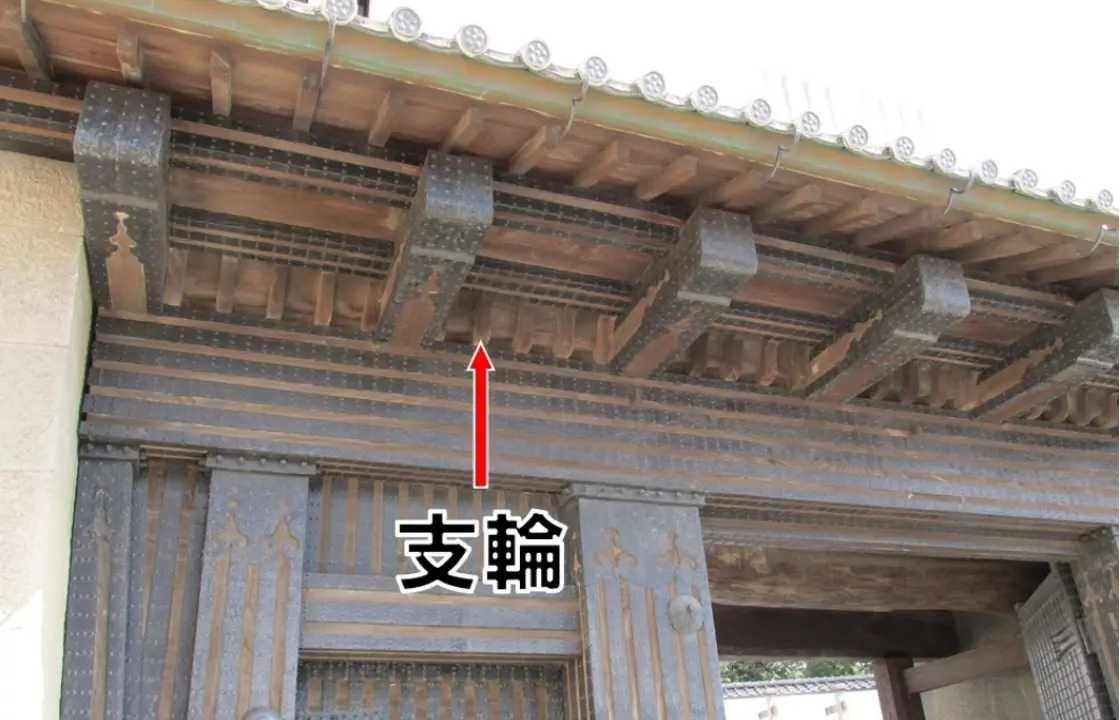
Ninomongate in the Yaguramon Style
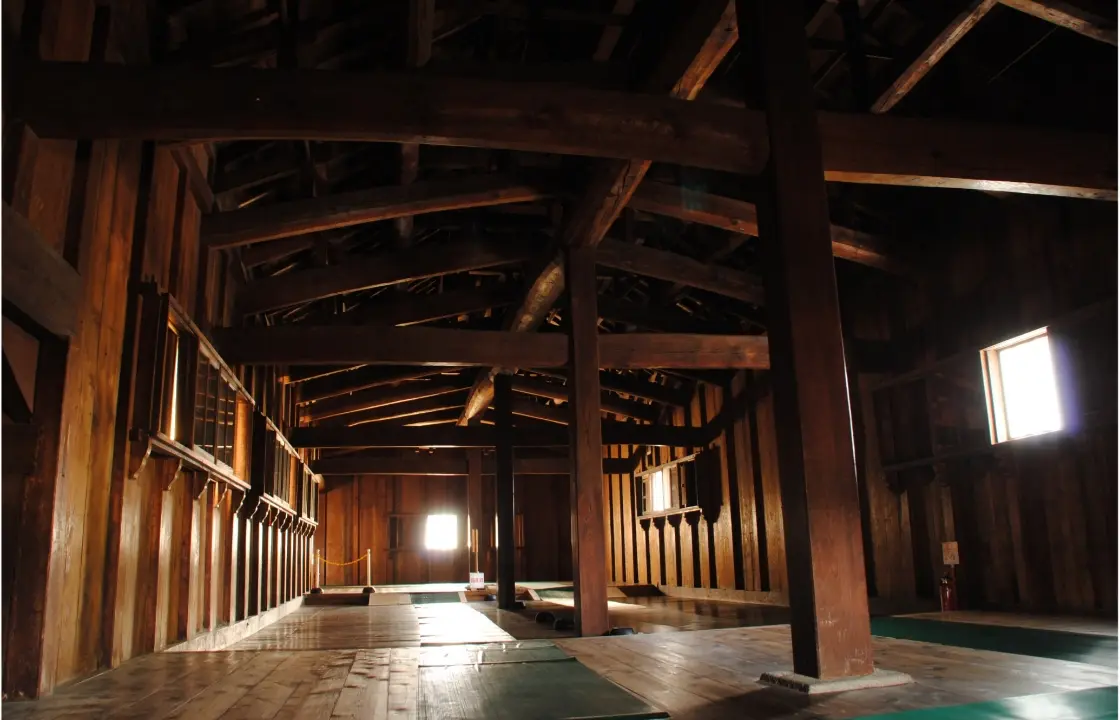
Inside the Yaguramon Gate
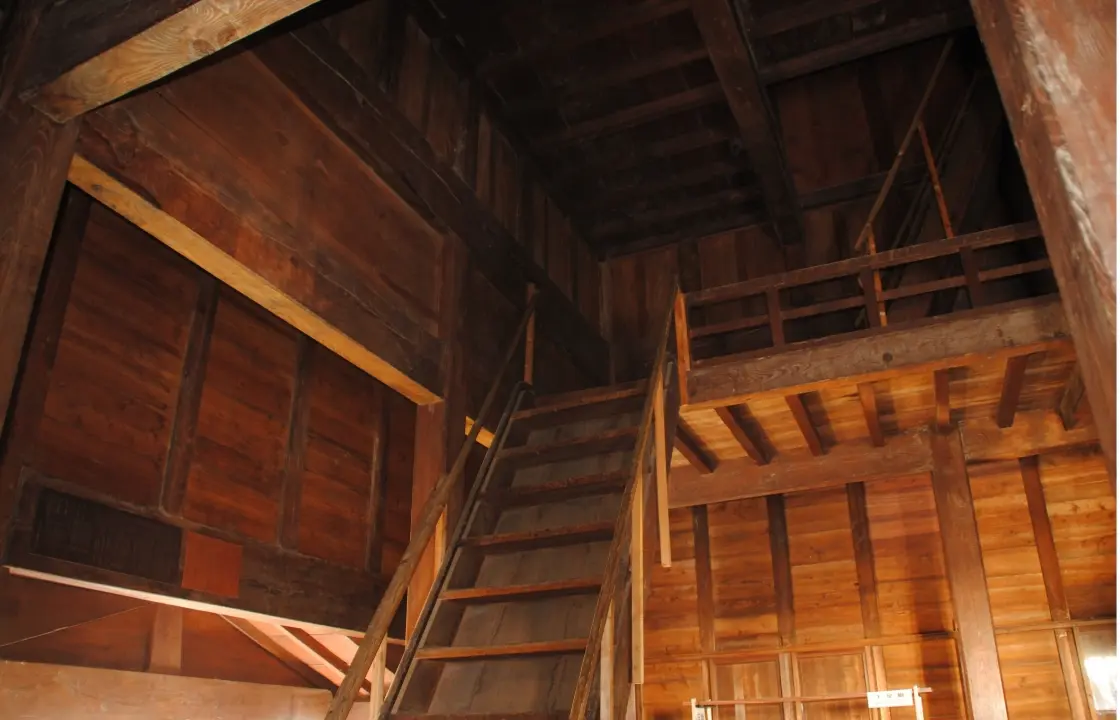
Inside the Yaguramon Gate

The stone walls largely retain their appearance following the repairs carried out in 1765 (Meiwa 2), after the great Hōreki fire. The south side of the masugata is built in the Rough Stone Stacking Technique,in which the surfaces of split stones are finished with chisel work; large chisel marks can be observed on the stones.
From the west side to the north side, the walls employ fully Cut Stone Stacking Technique, in which the joining surfaces are precisely shaped so the stones fit together without gaps.
The attached drum‑walls (taiko‑bei) extend 93.8 meters on the left side, with one projecting turret section (dashi) along the length, and the Mizunote Gate located at the southern end.
On the right side, the walls extend 150.58 meters and contain three projecting sections.
| Date of Important Cultural Property Designation | August 29, 1950 (Shōwa 25) |
|---|---|
| Original Construction | After the Keichō period (1596–1615) |
| Reconstruction | 1788 (Tenmei 8) |
| Preservation and Repair Work | 1953 (Shōwa 28), 2013 (Heisei 25) |