Important Cultural Property Buildings, Buildings from the Meiji Period
Tsurumaru Storehouse
This storehouse was once believed to have been constructed in the Meiji period. However, recent research based on historical drawings and documentary records has clarified that it was built earlier, in 1848 (Kaei 1), during the closing years of the Edo period.
Following this discovery, it was designated in 2008 (Heisei 20) as the third building within Kanazawa Castle to be recognized as a National Important Cultural Property.
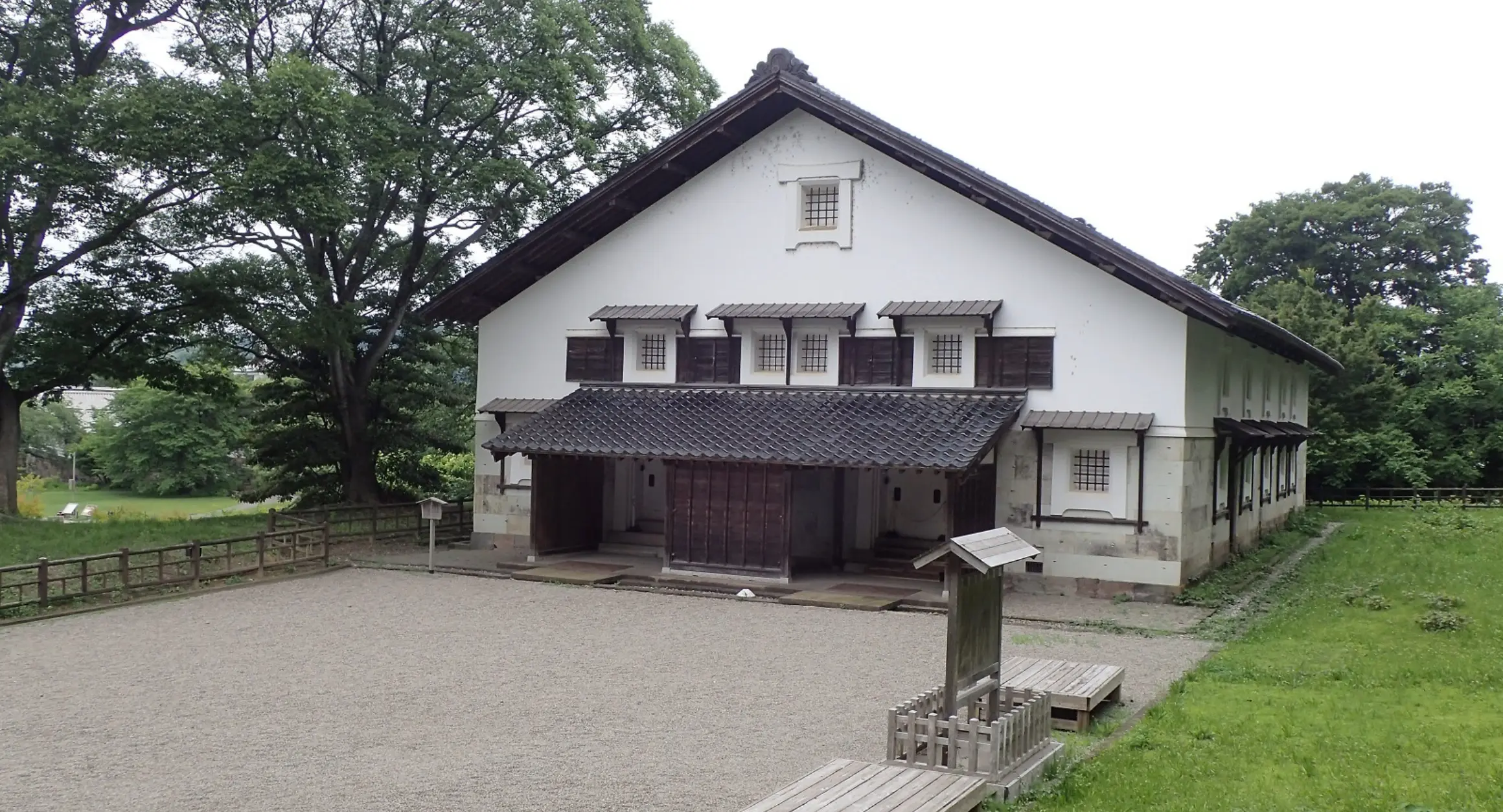
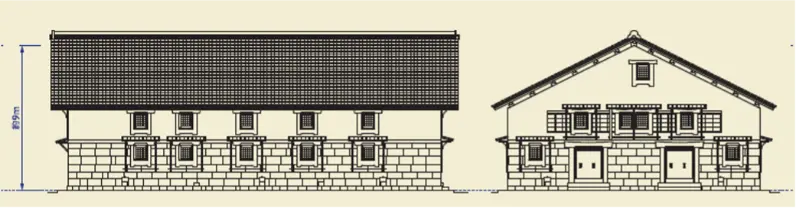
The gabled roof is covered with clay tiles (sangawara-buki) and features a saya‑yane structure, in which the ceiling space is enclosed with earthen walls and a second protective roof is built above it.
The interior is a full two-story structure, measuring approximately 22 meters in length and 15 meters in width, with a building footprint of 333 square meters (total floor area 636 square meters), making it one of the largest surviving storehouses within any Japanese castle complex.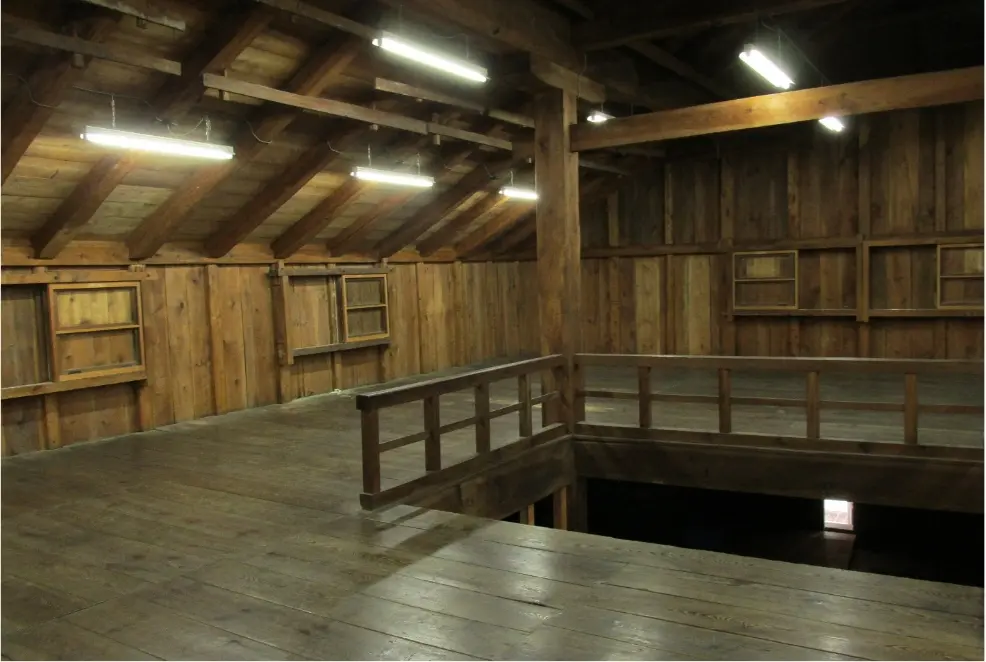
Interior of the Second Floor

Photos taken during the restoration
Damage to the exterior walls’ plaster and to the beam stones occurred during the Noto Peninsula Earthquake of January 2024 (Reiwa 6), and repair work was carried out through 2025 (Reiwa 7).
| Important Cultural Property Designation | June 9, 2008 (Heisei 20) |
|---|---|
| Construction | 1848 (Kaei 1) |
| Repairs | 2024–2025 (Reiwa 6–7) |