Changes After the Meiji Period
Changes After the Meiji Period
With the return of lands and registers to the emperor in 1869 (Meiji 2), Maeda Yoshiyasu, the fourteenth head of the Maeda family, left the Ninomaru Palace, bringing an end to the Maeda clan’s history at Kanazawa Castle.
After the abolition of feudal domains and establishment of prefectures in 1871 (Meiji 4), the site of Kanazawa Castle came under the jurisdiction of the Ministry of War (later the Ministry of the Army), and from the following year onward, it was used as military barracks.
Within the military, the Ninomaru Palace continued to serve as the central facility, although its interior appears to have been altered—for example, the grand audience hall was reportedly converted into a drill space.
However, in 1881 (Meiji 14), a fire caused by accident destroyed most of the remaining structures in the Ninomaru, including the palace buildings, gates, and turrets. By around 1882 (Meiji 15), the Kahoku-mon Gate was dismantled, and the surviving buildings of the former Kanazawa Castle gradually disappeared.
After the abolition of feudal domains and establishment of prefectures in 1871 (Meiji 4), the site of Kanazawa Castle came under the jurisdiction of the Ministry of War (later the Ministry of the Army), and from the following year onward, it was used as military barracks.
Within the military, the Ninomaru Palace continued to serve as the central facility, although its interior appears to have been altered—for example, the grand audience hall was reportedly converted into a drill space.
However, in 1881 (Meiji 14), a fire caused by accident destroyed most of the remaining structures in the Ninomaru, including the palace buildings, gates, and turrets. By around 1882 (Meiji 15), the Kahoku-mon Gate was dismantled, and the surviving buildings of the former Kanazawa Castle gradually disappeared.

軍隊時代の御殿の姿を表す図面・大広間には練場の記載が見える 「金沢城廓内絵図面」(石川県立図書館蔵)

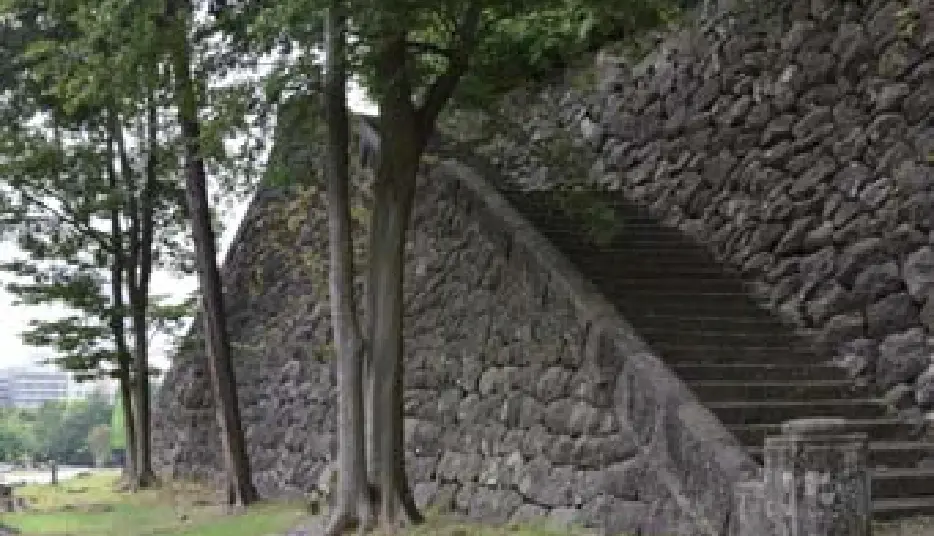
The stone walls of the castle were also significantly altered by the military. The stone wall on the north side of the Honmaru was dismantled and rebuilt with a tunnel cut through it. The tall stone walls on the south side of the Honmaru were likewise extensively modified, and stairways for climbing the walls were added in several locations.
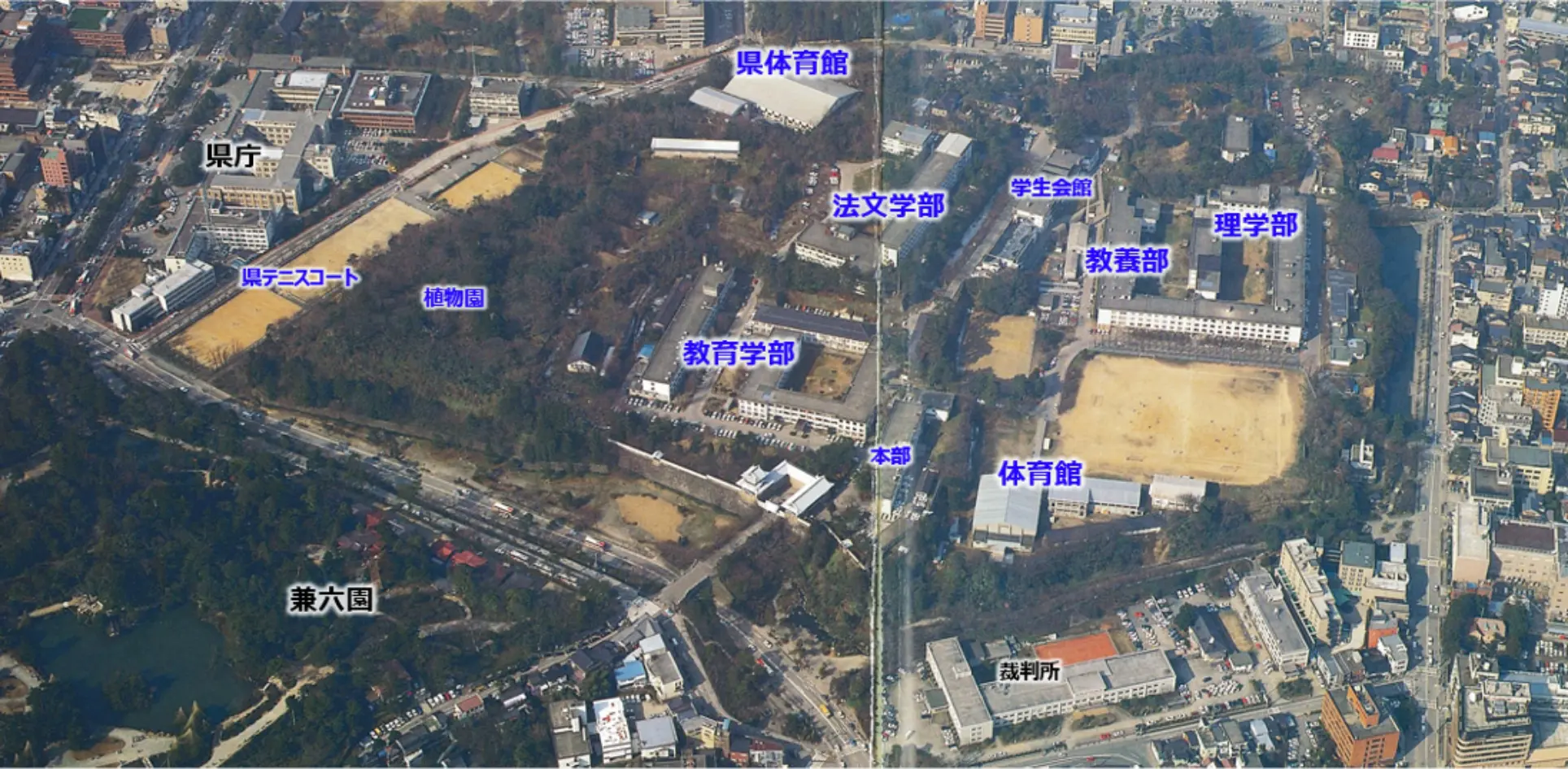
After the war, Kanazawa University was established in 1949 (Shōwa 24). The university’s headquarters, the College of Liberal Arts, and the Faculty of Science—along with all faculties except Engineering and Medicine—were located on the castle grounds. It became widely known and fondly remembered as one of the rare universities in Japan situated inside a castle.
In Gyokusen’inmaru, athletic facilities were installed, and the surrounding areas were gradually developed into public parks, including the construction of tennis courts in Imori‑bori.
In Gyokusen’inmaru, athletic facilities were installed, and the surrounding areas were gradually developed into public parks, including the construction of tennis courts in Imori‑bori.
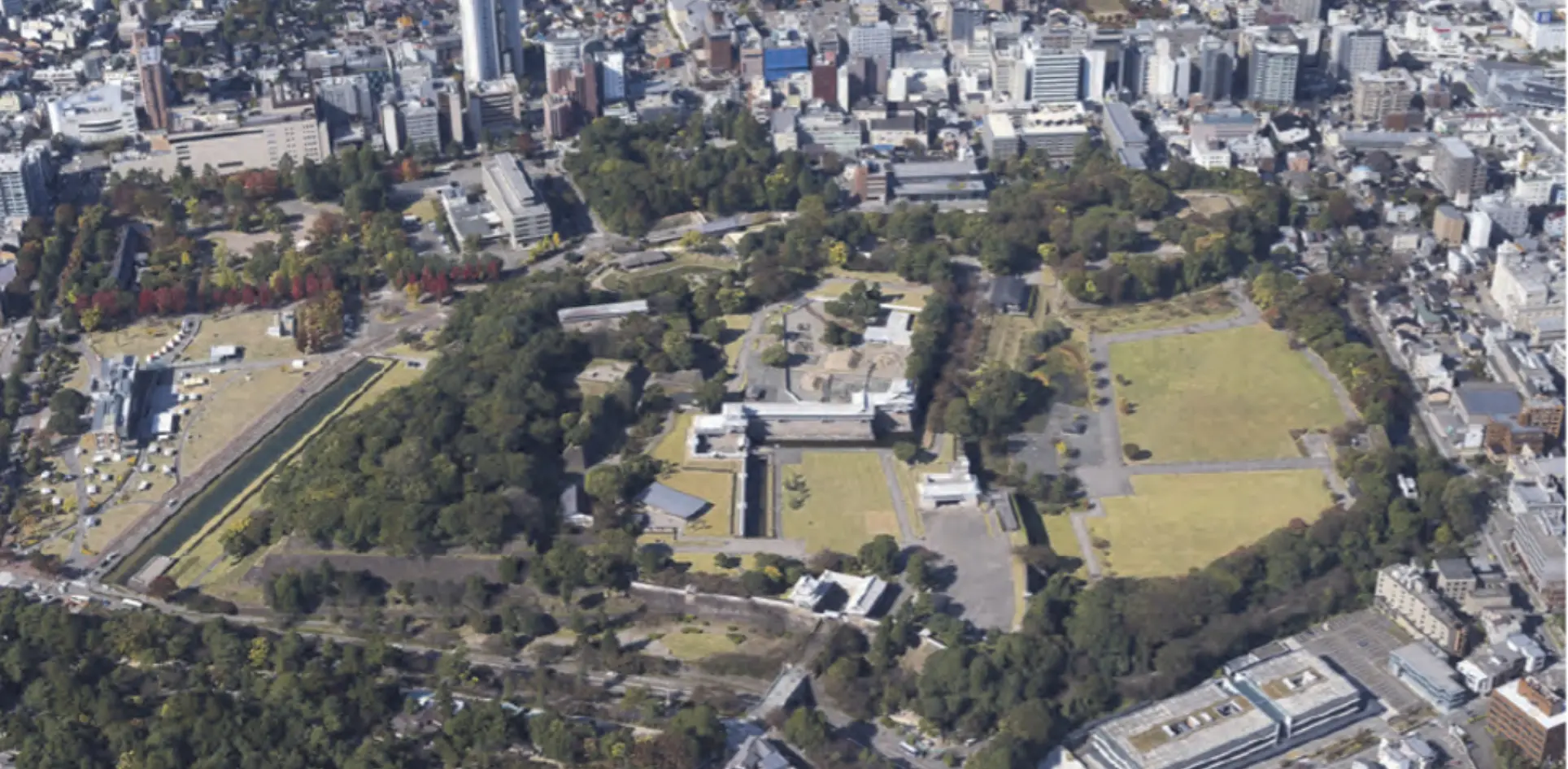
By 1995 (Heisei 7), the university had completed its relocation to the suburbs. In 1996 (Heisei 8), Ishikawa Prefecture acquired the site and began developing it as Kanazawa Castle Park, leading to its present form.