Techniques of Lead Tiles
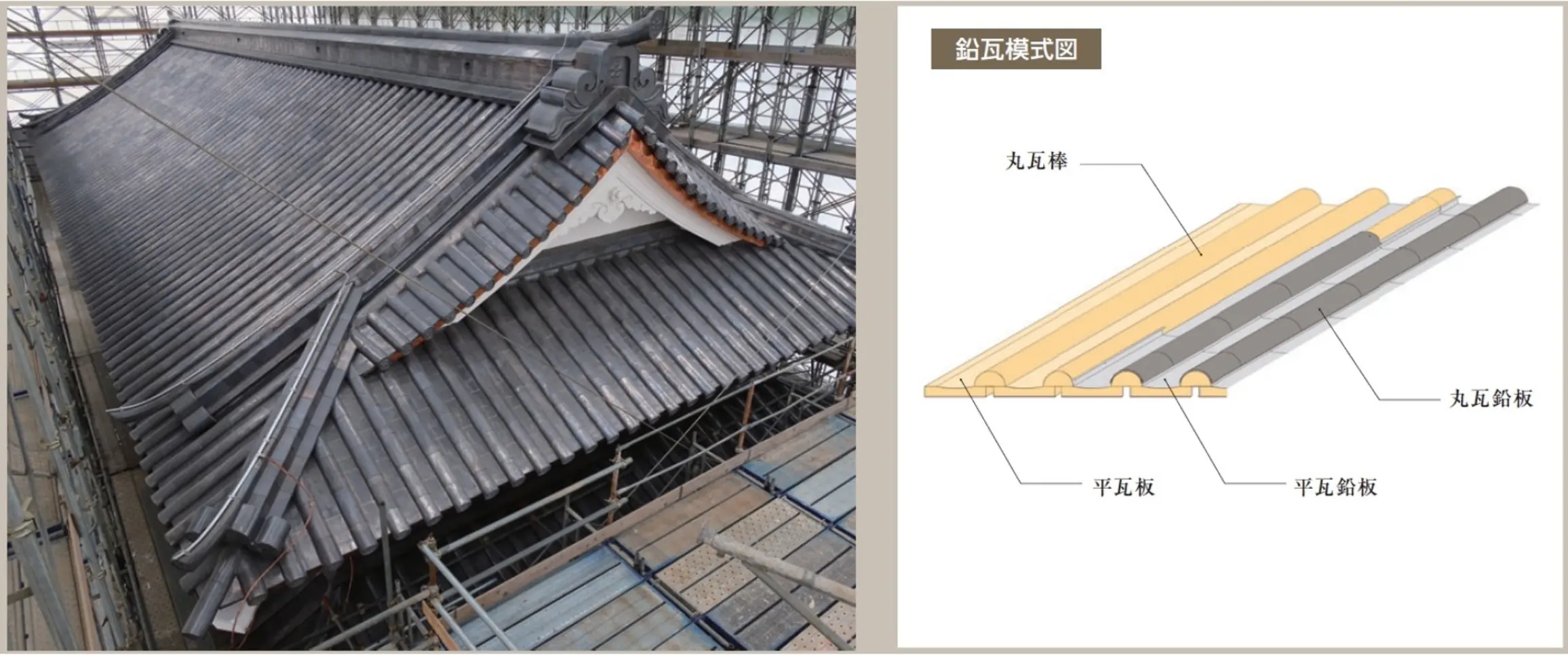
Process of Making Lead Tiles
Doibuki (Roof Base Preparation)
Thin boards of Noto cypress, about 3 mm thick, are layered and secured with bamboo nails to form the foundation beneath the tiles.

Installation of Wooden Tile Bases
On top of the doibuki, wooden tile forms—shaped to match round tiles, flat tiles, decorative end tiles, and other tile types—are installed to serve as molds for attaching the lead sheets.

Processing the Lead Sheets
Lead sheets approximately 1.8 mm thick are cut and shaped to create the material for the lead tiles.
Tiles with crests or patterns are manufactured through casting.

Installation of Eave Tiles
Roofing begins from the lower edge, where decorative round tiles and karakusa tiles bearing family crests are installed along the eaves.

Attaching the Lead Sheets
Lead sheets for flat and round tiles are hammered into place over the wooden forms using a wooden mallet with a rubber surface, then fixed with copper nails.

Lead Wrapping
The uppermost elements—such as the box ridge and decorative ridge-end tiles—are wrapped in lead to complete the finish.
