Successive Lords of the Castle and Related Figures
Sakuma Morimasa
Sakuma Morimasa became the first lord of Kanazawa Castle after the fall of the Kanazawa Mibo. Known as a fierce warrior called “Oni Genba,” he is said to have refused to submit to Toyotomi Hideyoshi even after being defeated and captured at the Battle of Shizugatake.
The appearance of Kanazawa Castle during the Sakuma era remains unclear.
Maeda Toshiie
Maeda Toshiie succeeded Sakuma Morimasa as the lord of Kanazawa Castle. Born in Arako of Owari Province (present-day Aichi Prefecture), Toshiie served under Oda Nobunaga. As a subordinate of Shibata Katsuie, he fought across the Hokuriku region and, after serving in Fuchū of Echizen (present-day Takefu in Echizen City), was granted control over all of Noto Province in 1581 (Tenshō 9), establishing himself as a feudal lord.
After the Battle of Shizugatake, Toyotomi Hideyoshi granted him Kaga Province, whereupon he entered Kanazawa Castle.
Although he likely spent long periods away from the castle as one of the Five Elders (Gotairō) of the Toyotomi administration, he nonetheless promoted the development of the castle, including the construction of the tenshu tower and high stone walls.
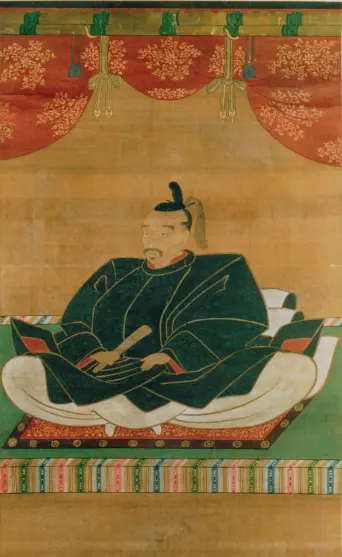
前田利家(尾山神社蔵)
Maeda Toshinaga
Born as the eldest son of Toshiie and his lawful wife Matsu, Toshinaga also served Oda Nobunaga alongside his father. After the Battle of Shizugatake, he served Toyotomi Hideyoshi and became active as a regional lord in the Hokuriku area. In 1598 (Keichō 3), he inherited leadership of the Maeda clan from Toshiie and became lord of Kanazawa Castle.
During the Battle of Sekigahara, Toshinaga sided with the Eastern Army, and after the war he received additional lands, becoming the largest feudal lord under the Edo shogunate, ruling the three provinces of Kaga, Noto, and Etchū—collectively known as the Kaga Domain.
After his retirement, he moved to Takaoka and constructed Takaoka Castle.
His lawful wife was Eihime, daughter of Oda Nobunaga. After Toshinaga’s death in Takaoka, Eihime moved to the Nishinomaru area of Kanazawa Castle, where she spent her later years. After her death, the Nishinomaru was renamed Gyokusen’inmaru after her posthumous Buddhist title, Gyokusen’in.
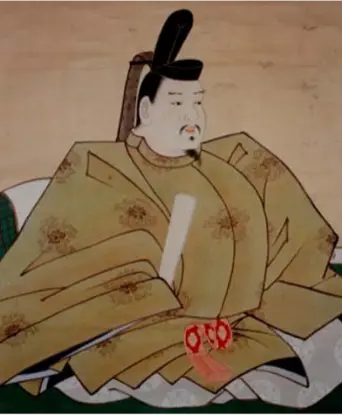
前田利長(魚津歴史民俗博物館蔵)
Maeda Toshitsune
Because Toshinaga had no male heir, his younger brother, Toshitsune, was adopted as his successor. In 1605 (Keichō 10), Toshinaga retired, and Toshitsune succeeded him as lord of Kanazawa Castle.
Following the great fire of 1631 (Kan’ei 8), Toshitsune relocated the castle’s main functions from the Honmaru to the Ninomaru and constructed the Ninomaru Palace. The basic layout of present-day Kanazawa Castle was largely established during his rule.
After he transferred leadership to his eldest son, Mitsutaka—who died young—Toshitsune continued to oversee domain administration as guardian for Mitsutaka’s son Tsunanori, who inherited the leadership while still a child.
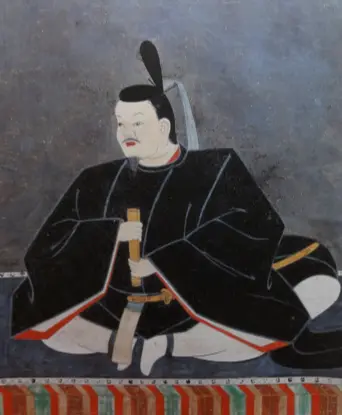
前田利常(那谷寺蔵)
Maeda Tsunanori
Tsunanori inherited the leadership at the age of three after the sudden death of his father, Mitsutaka. He remained lord from 1639 (Kan’ei 16) to 1723 (Kyōhō 8), ruling for an impressive 78 years.
Celebrated as an exemplary lord, he implemented various administrative reforms, including new land development and the establishment of the Kaga Hakka (Eight Senior Retainers). He also promoted scholarship and the arts and personally oversaw the collection and compilation of the Hyakkō Hisyo.
The Shikishitanzaku-zumi Stone Walls—considered works of art—of the Gyokusen’inmaru Garden were also constructed during Tsunanori’s time.

前田綱紀(前田育徳会蔵)